
How the lunar cycle may influence hormones and mood.
For thousands of years, humans have felt a connection with the moon. Farmers planted crops by its glow, healers tracked energy shifts, and many cultures linked the lunar cycle to the rhythms of the human body, especially hormonal, emotional, and reproductive cycles.
Today, although scientific research on the moon’s direct influence on hormones is still developing, many people continue to report patterns: changes in sleep, mood, energy levels, and even cravings that appear to ebb and flow with the moon.
You only need to know someone who has worked in the emergency services or mental health to see this play out every month.
Rather than dismissing these experiences or making medical claims, it’s more helpful to acknowledge a simple truth:
The moon offers a symbolic and energetic rhythm that can help us understand our own cycles.
By using the moon phases as a framework for self-awareness, many people find it easier to work with their body instead of pushing against it.
Below is a deeper look into each moon phase, how it may intersect with mood and hormone patterns, and practical tips to help you stay regulated and grounded throughout the month.
New Moon - The rest and reset phase
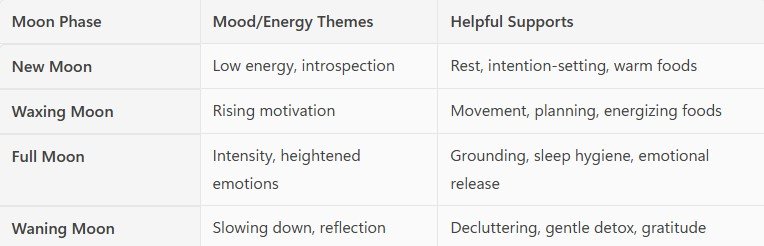
The new moon represents beginnings, quietness, and inward focus. Many people report feeling more introspective, lower in energy, or craving solitude around this time.
From a physiological perspective, this phase often aligns with:
· a desire for more sleep
· reduced motivation
· a natural “slowing down” sensation
These can mimic lower cortisol output, or simply reflect your body prioritising rest after a busy period.
How mood may shift
Some people experience:
· emotional heaviness or sensitivity
· increased self-reflection
· reduced social energy
This can be an ideal time to honour emotional needs rather than forcing productivity.
Tips to support your hormones and mood
1. Prioritise rest without guilt.
Go to bed earlier, reduce commitments, and give yourself mental space.
2. Create a New Moon ritual.
Setting intentions can regulate stress responses by activating the parasympathetic nervous system. Try:
· journalling
· lighting a candle
· listing what you want to welcome in
3. Nourish your body gently.
Warm, grounding foods like soups, oats, and herbal teas can support a sense of safety and stability.
4. Reduce screen time.
This helps melatonin balance and improves emotional regulation.
Waxing Moon: The build-and-grow phase
As the moon grows, many people feel their own energy rising. This is often described as a time of:
· increased motivation
· clearer thinking
· higher physical stamina
Some compare this to a natural rise in hormones like dopamine and oestrogen, though this is not scientifically proven, it’s a useful metaphor for the energetic shift people report.
How mood may shift
Common experiences include:
· improved optimism
· stronger decision-making
· higher confidence
This is an ideal time for forward momentum.
1. Channel your energy into productive action.
Make plans, start projects, and take steps toward intentions set during the new moon.
2. Increase movement.
Walks, strength training, or yoga flows complement the rising energy.
3. Eat energising foods.
Think fresh produce, quality proteins, and complex carbs.
4. Practice positive self-talk.
This phase carries momentum; your brain is primed to build on it.
5. Hydrate consistently.
As energy rises, people often forget to drink water, which affects mood and cognitive clarity.
Full Moon: The peak-energy-and-intensity phase
The full moon is the brightest, boldest phase, and many people report the strongest emotional reactions here. It can feel like everything intensified:
· emotions
· intuition
· restlessness
· creativity
Some people sleep poorly during the full moon, likely due to increased brightness and potential changes in melatonin regulation.
How mood may shift
During the full moon, people commonly experience:
· heightened emotions
· irritability or agitation
· bursts of creativity
· difficulty relaxing
· increased sensitivity in relationships
Even if the moon is not directly altering hormones, sleep disruption alone can lead to mood fluctuations.
Tips to support your hormones and mood
1. Prioritise sleep hygiene. Poor sleep = heightened cortisol, lower emotional resilience.
Try:
· limiting blue light
· using blackout curtains
· winding down earlier
2. Release pent-up emotion. Full moons often bring things to the surface.
Try:
· breathwork
· journaling
· speaking your truth with someone safe
3. Engage in grounding practices.
· Especially helpful if you feel overstimulated:
· walking barefoot on grass
· guided meditation
· gentle stretching
4. Avoid major confrontations.
Emotions run high; clarity returns when the intensity passes.
5. Drink calming herbal teas.
Chamomile, lemon balm, and lavender support relaxation.
Waning Moon: The let-go-and-reflect phase
As the moon dims, energy often declines too. This is a time for:
· reflection
· decluttering
· finishing projects
· emotional release
It’s the “exhale” after the full moon’s intensity.
How mood may shift
You may experience:
· lowered energy
· increased need for alone time
· desire to simplify your life
· a sense of completion
This can feel similar to the natural lowering of stress hormones after a peak.
Tips to Support Your Hormones and Mood
1. Focus on gentle detoxification.
This is not about extreme cleanses, think:
· drinking water
· eating fibre
· going for walks
2. Let go of what you no longer need.
Energetically and practically.
Declutter a drawer or release old emotional stories.
3. Slow your schedule.
Honour your natural desire to move inward.
4. Practice gratitude.
Reflecting on the month so far can shift brain chemistry toward calm and contentment.
5. Create space for quiet.
This phase rewards simplicity.
Bringing it all together
The moon gives us a gentle structure for understanding our own rhythms, even if its influence isn’t directly hormonal. What is clear is that many of us benefit from:
· slowing down at certain times
· ramping up at others
· paying attention to emotional waves
· honouring our cyclical nature
By using the moon as a guide, you’re not obeying an external force; you’re tuning into yourself more deeply.
Whether or not the moon directly affects hormones, it undeniably shapes our environment, light, tides, sleep, mood, and many people feel these shifts in their bodies.
By paying attention to your internal patterns and aligning your self‑care with the lunar cycle, you create a powerful way to regulate your moods, support your emotional health, and live with greater intention and flow.
Your body has rhythms, the moon simply helps you hear them more clearly.
